Agents can blend in with the rest of your traffic.
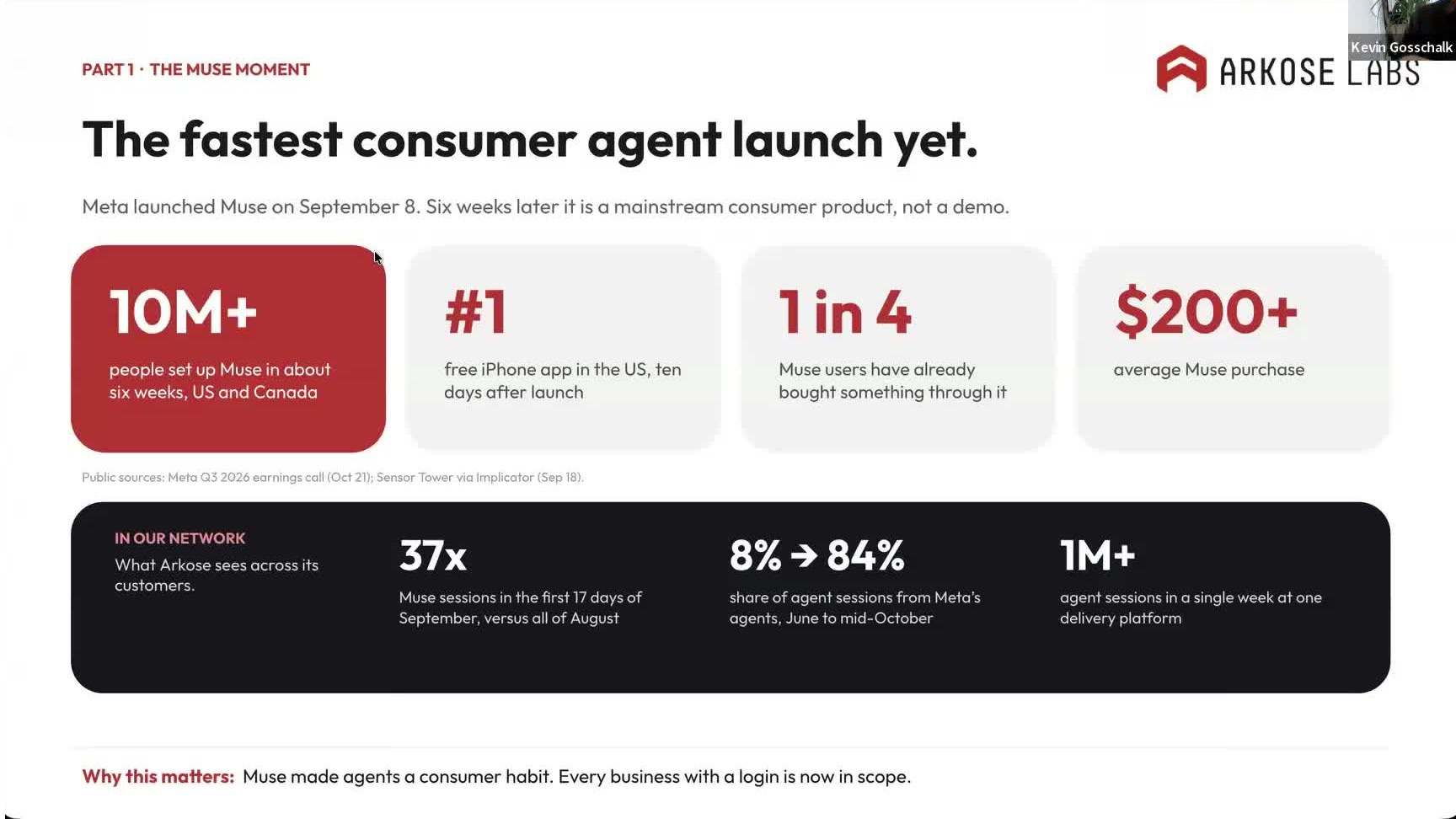
Residential proxies are now the default for AI agents. Arkose Labs founder and CEO Kevin Gosschalk explains why the residential proxies agents buy from are the same ones fraudulent actors buy from. In 10 days, Meta Muse, Grok Bot and Instinct moved onto the same home and mobile IPs customers use. Meta Muse went from 1% to 40% of Linux sessions arriving from US and UK home and mobile carriers on a given day since Oct. 8, and 25 to 50% of Grok Bot sessions exit through residential ISPs. Of Meta Muse and Instinct residential sessions, 43% and 29% came from IPs already seen in commercial proxy pools, and those pools carried twice the abuse rate.
About the speaker
The same residential proxies we see these systems buying from are the same ones fraudulent actors are buying from.
So you really won't be able to rely on the network layer for detection and classification.
Residential proxies are problematic for a range of reasons, but the first reason perhaps is that the same residential proxies we see these systems buying from are the same ones fraudulent actors are buying from.
So you really won't be able to rely on the network layer for detection and classification. If you're trying to use tools that are just at the network and edge layer, you're going to lose visibility to agents very quickly, and they're going to be able to masquerade in with the rest of your traffic.

Decide which AI agents to trust. Stop the fraud that costs you money.