Discover how fraudsters target dating platforms, using them as top recruitment locations for human trafficking. Download the infographic for the latest data!
Insight into how fraudsters leverage emotional vulnerability, anonymity, and real-time messaging to manipulate users and scale harmful activity.
A breakdown of how scammers use account sign-up, sign-in, and SMS channels to initiate contact, build credibility, and bypass basic verification safeguards.
Analysis of Q4 spikes, when holidays and increased loneliness lead users to overlook warning signs—providing scammers with optimal conditions to launch intensive campaigns.
A closer look at account takeover, fake account creation, and SMS fraud, and how increased fake profile activity lays the foundation for high-risk exploitation—including human trafficking recruitment.
Understanding why scammers overwhelmingly target mobile channels, where app-driven convenience often comes with reduced scrutiny.
Dating platforms combine large user populations, real-time communication, and emotional vulnerability. Scammers capitalize on these dynamics to create fake identities, build trust quickly, and guide victims into harmful off-platform interactions—including financially motivated scams and trafficking recruitment pathways.
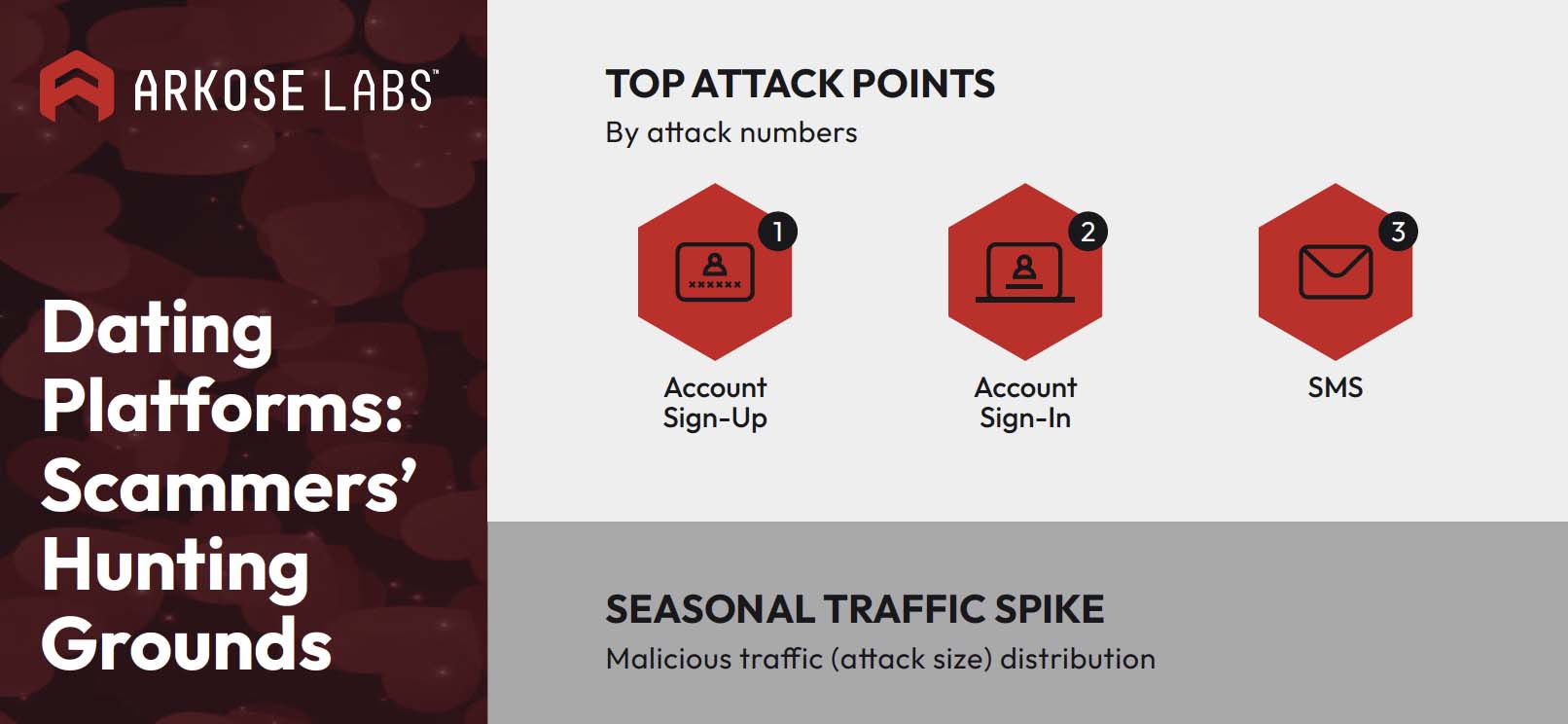
Attackers concentrate on account sign-up and sign-in flows to seed fake profiles and hijack legitimate ones. SMS channels are also heavily abused for verification bypass, phishing, and extending contact beyond the platform’s safeguards.
Q4 brings heightened emotional vulnerability and increased app engagement. Users seeking connection may ignore red flags, while scammers intensify efforts to deploy fake accounts and manipulate victims. This seasonal spike creates a more permissive environment for high-risk fraud and recruitment tactics.
Discover how fraudsters target dating platforms, using them as top recruitment locations for human trafficking. Download the infographic for the latest data!
Insight into how fraudsters leverage emotional vulnerability, anonymity, and real-time messaging to manipulate users and scale harmful activity.
A breakdown of how scammers use account sign-up, sign-in, and SMS channels to initiate contact, build credibility, and bypass basic verification safeguards.
Analysis of Q4 spikes, when holidays and increased loneliness lead users to overlook warning signs—providing scammers with optimal conditions to launch intensive campaigns.
A closer look at account takeover, fake account creation, and SMS fraud, and how increased fake profile activity lays the foundation for high-risk exploitation—including human trafficking recruitment.
Understanding why scammers overwhelmingly target mobile channels, where app-driven convenience often comes with reduced scrutiny.
Dating platforms combine large user populations, real-time communication, and emotional vulnerability. Scammers capitalize on these dynamics to create fake identities, build trust quickly, and guide victims into harmful off-platform interactions—including financially motivated scams and trafficking recruitment pathways.
Attackers concentrate on account sign-up and sign-in flows to seed fake profiles and hijack legitimate ones. SMS channels are also heavily abused for verification bypass, phishing, and extending contact beyond the platform’s safeguards.
Q4 brings heightened emotional vulnerability and increased app engagement. Users seeking connection may ignore red flags, while scammers intensify efforts to deploy fake accounts and manipulate victims. This seasonal spike creates a more permissive environment for high-risk fraud and recruitment tactics.
With 20% of customers being Fortune 500 companies, Arkose Labs protects the world’s leading enterprises in major industries such as financial services, e-commerce, travel, technology, and telecommunications.


|
Arkose Scraping Protection: Protect Digital Assets and Stop Automated Theft
|