Financial platforms are lucrative targets, with billions at stake driving sophisticated and persistent fraud behavior. Download the infographic for the latest data!
An overview of how financial incentives, high transaction velocity, and regulatory complexity create ideal conditions for large-scale fraud activity.
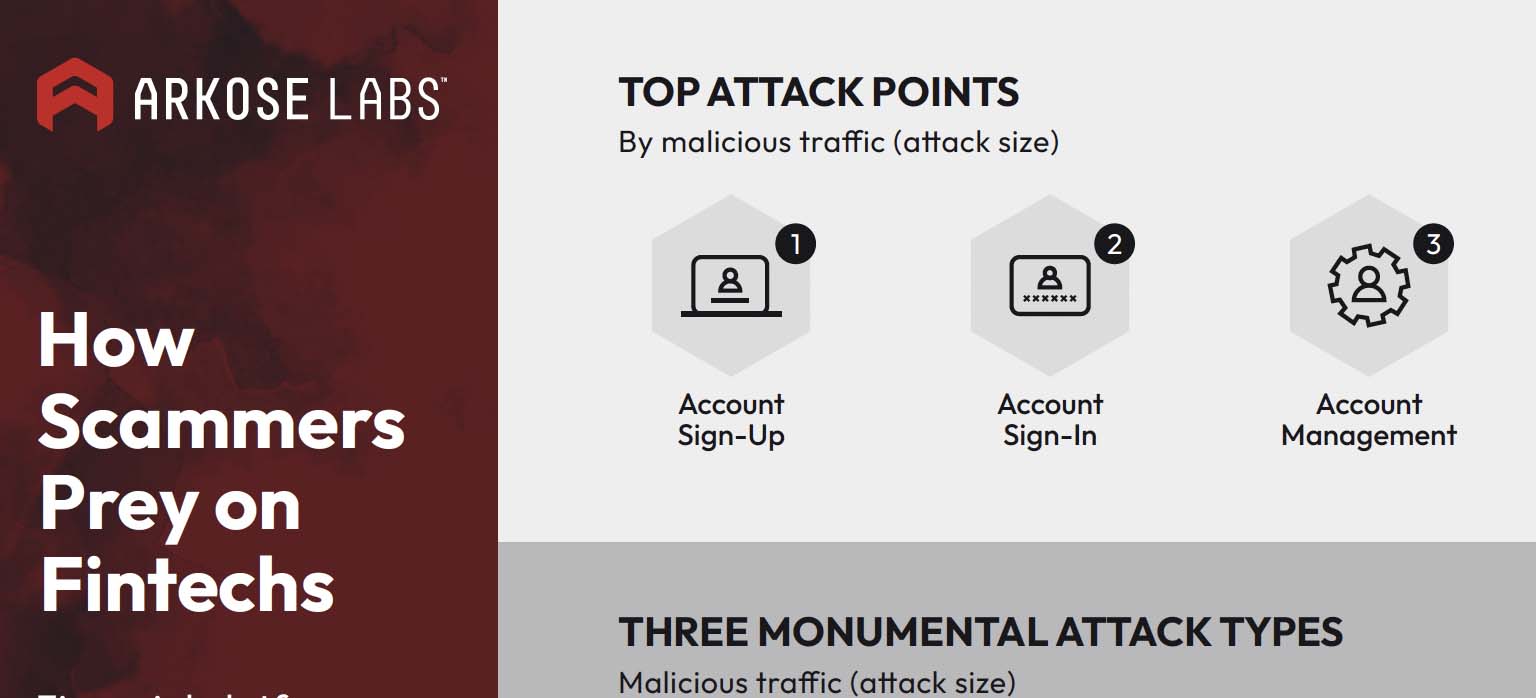
A breakdown of sign-in, sign-up, and account management flows—and why each provides opportunities for scammers to infiltrate and escalate abuse.
Insight into account takeover attempts, in-app threats, and the rapid rise of SMS toll fraud as attackers shift strategies to exploit verification and messaging weaknesses.
A look at how bots, advanced bots, attack automation services, and human fraud farms collectively fuel persistent, high-volume attacks across financial ecosystems.
Understanding how adversaries pivot in response to KYC controls, regulatory pressure, or emerging vulnerabilities.
Fintechs handle money movement, identity verification, and sensitive personal data—making them highly appealing to threat actors. The combination of financial reward and digital accessibility allows scammers to launch frequent, high-volume attempts with meaningful upside.
Attackers focus heavily on account sign-in and sign-up flows, where they can test stolen credentials, create fraudulent accounts, and exploit onboarding processes. Account management surfaces also offer opportunities for profile manipulation, credential resets, or payment method abuse.
Fintech threats increasingly shift toward SMS-based fraud, automated bot traffic, and in-app abuse—often in response to stronger KYC requirements or tighter regulatory expectations. These pivots reflect how quickly scammers adjust tactics to exploit gaps in verification and digital authentication flows.
Financial platforms are lucrative targets, with billions at stake driving sophisticated and persistent fraud behavior. Download the infographic for the latest data!
An overview of how financial incentives, high transaction velocity, and regulatory complexity create ideal conditions for large-scale fraud activity.
A breakdown of sign-in, sign-up, and account management flows—and why each provides opportunities for scammers to infiltrate and escalate abuse.
Insight into account takeover attempts, in-app threats, and the rapid rise of SMS toll fraud as attackers shift strategies to exploit verification and messaging weaknesses.
A look at how bots, advanced bots, attack automation services, and human fraud farms collectively fuel persistent, high-volume attacks across financial ecosystems.
Understanding how adversaries pivot in response to KYC controls, regulatory pressure, or emerging vulnerabilities.
Fintechs handle money movement, identity verification, and sensitive personal data—making them highly appealing to threat actors. The combination of financial reward and digital accessibility allows scammers to launch frequent, high-volume attempts with meaningful upside.
Attackers focus heavily on account sign-in and sign-up flows, where they can test stolen credentials, create fraudulent accounts, and exploit onboarding processes. Account management surfaces also offer opportunities for profile manipulation, credential resets, or payment method abuse.
Fintech threats increasingly shift toward SMS-based fraud, automated bot traffic, and in-app abuse—often in response to stronger KYC requirements or tighter regulatory expectations. These pivots reflect how quickly scammers adjust tactics to exploit gaps in verification and digital authentication flows.
With 20% of customers being Fortune 500 companies, Arkose Labs protects the world’s leading enterprises in major industries such as financial services, e-commerce, travel, technology, and telecommunications.


|
Arkose Scraping Protection: Protect Digital Assets and Stop Automated Theft
|