
Strengthening Security and Elevating User Experiences: Introducing Arkose Device ID in an Evolving Threat Landscape
In today's increasingly digital and interconnected world, traditional security measures — once deemed foolproof — are now being exploited by sophisticated cybercriminals. Whether it's fake account creation, account takeovers (ATO), session hijacking, or fraudulent transactions, the attack surface is larger than ever. A recent proprietary study by Arkose Labs found that more than 70% of enterprises consider identity-based attacks—including fake account creation and ATO, to be their top security concern. Even more troubling, 40% of these attacks are AI-powered, reflecting the growing sophistication of modern threats. At Arkose Labs, we believe that tackling these advanced threats requires adaptive, intelligent solutions that evolve with the landscape. That’s why we’re excited to introduce our Arkose Device ID—an advanced device identification system designed to not only bolster fraud detection and prevention but also enhance the user experience across critical interactions like registration, login, and payments. In a time when fraudsters increasingly target weak points in the customer journey, this feature offers an innovative approach to strengthening security without adding unnecessary friction for legitimate users.The Problem with Traditional Security Measures
Today’s security landscape is shifting: traditional tools that once signaled trust are now vulnerabilities, especially against AI-driven fraud tactics. Sophisticated attackers, often aided by bots, can easily spoof these signals, bypassing standard detection. The World Economic Forum highlights this reality, noting that AI now enables cybercriminals to create advanced identity scams that put individuals and organizations at risk. With more than 775 million stolen credentials available for sale, fraudsters have a direct path into what should be secure systems—an issue that over 70% of executives in Arkose Labs’ survey see as a top concern. Arkose Labs' study also found that 88% of security professionals report a rise in AI-powered bot attacks, where bots can mimic trusted devices and identities to evade detection. "We're effective at blocking repeat fraud attempts, but catching them early is where device identification is crucial," said an engineering leader at a fast-growth neobank. In response, Arkose Labs is introducing solutions that provide resilience, adaptability, and intelligence to help businesses stay ahead of these evolving threats.The Role of Device Identification in a Sophisticated Threat Landscape
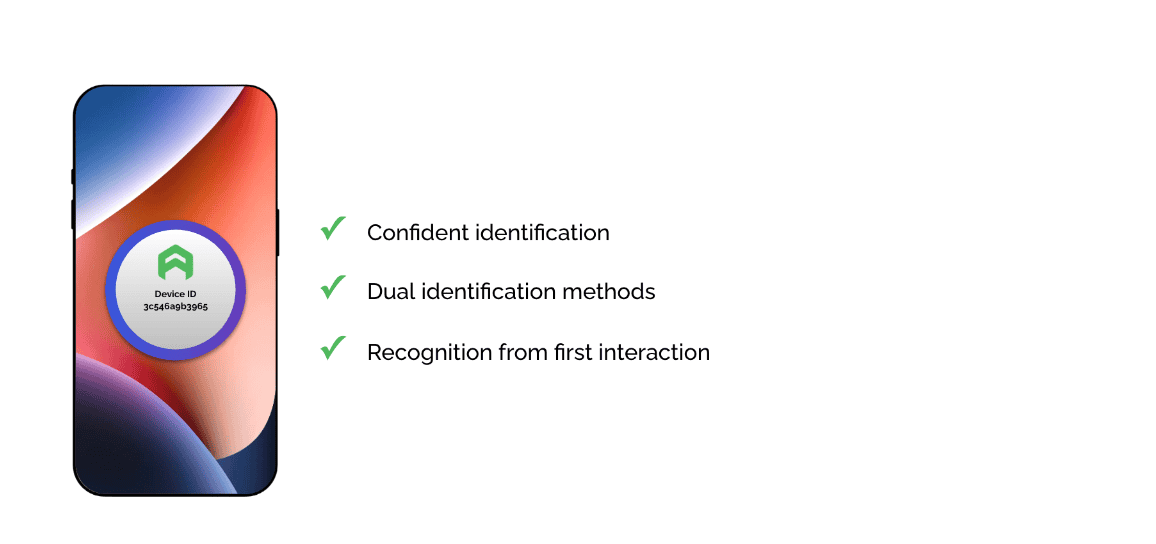
This is where Arkose Device ID steps in. By introducing Arkose Device ID into your fraud detection strategy, you add a layer of insight that is harder to fake. This system creates unique, persistent identifiers for each device, allowing you to track specific devices and correlate their behavior with user-specific signals like user IDs, email addresses, and payment methods. Unlike traditional identifiers, which can be easily spoofed, Arkose Device ID leverages hardware attributes, browser configurations, and session telemetry to create a detailed, dynamic fingerprint of each device. Arkose Device ID goes beyond traditional device fingerprinting. It combines session-based risk insights with anti-spoofing technology, ensuring precise tracking so you can distinguish between genuine users, bots, and bad actors—an unmatched approach in the industry. By leveraging both stateful and stateless methods to create unique identifiers, Arkose Device ID allows you to maintain accurate, persistent device tracking without the disruptions that version updates or other changes often cause with competing solutions. The beauty of our technology is its seamless integration as an add-on to the Arkose Labs solution. It assigns unique device identifiers to all incoming traffic, giving you visibility into user behaviors tied to those devices from the very first interaction—without needing additional vendors or datasets. This continuous, real-time, proactive monitoring helps prevent fraud before it can escalate. To support ongoing improvements in our device identification capabilities, our Device ID includes a robust versioning feature. This versioning feature ensures that as we continue enhancing the identifier we maintain a clear link to the previous version of the identifier. By implementing this versioning system, we are able to enhance the efficacy without causing disruption.