
This is the second post in a seven-part series examining how Arkose Labs has engineered a response to the agentic AI threat. If you haven't read part one yet, I recommend you start with The Economics of Fraud Have Changed. Here's Why.
The year is 2003. A Carnegie Mellon researcher named Luis von Ahn, working with Manuel Blum, Nicholas J. Hopper, and John Langford, coins the term CAPTCHA: Completely Automated Public Turing test to tell Computers and Humans Apart. It works. Bots of that era are primitive, brittle things, scripted to navigate predictable page flows, unable to parse visual noise or interpret distorted text. A simple image of warped letters is enough to stop them cold.
The model's logic rests on a single assumption: If you're human, you're legitimate. If you're a bot, you're not. Pass the test, you're in. Fail, you're blocked. Simple, deterministic, and, for its time, effective.
In 2003, that was a reasonable assumption to build a security model around. In 2026, it is not just insufficient, it is fundamentally broken. And Arkose Labs has not been a CAPTCHA for a long time.
The World CAPTCHA Was Built For No Longer Exists
The internet of 2026 contains four distinct categories of traffic that a binary bot-or-human classification cannot meaningfully distinguish.
Good bots, legitimate automation: search crawlers, price comparison tools, booking assistants, accessibility agents helping users navigate services they couldn't otherwise reach.
Bad bots, malicious automation: credential stuffing, fake account creation, scraping, API abuse.
Good humans, genuine users with genuine intent.
Bad humans, human fraud operators running click farms, fraud farms, and challenge-solving sweatshops that exist for a single purpose: to pass authentication flows and enable downstream attacks at scale.
A CAPTCHA handles exactly one of these distinctions. It asks whether you are automated or not. It does not, and cannot, ask whether you are legitimate. A human operator sitting in a fraud farm is still human. A sophisticated bot trained on millions of labeled images still passes the visual test. The assumption that verification equals legitimacy was always fragile. CAPTCHAs just had the benefit of operating at a time when the gap between human and bot behavior was wide enough to make that fragility invisible.
That gap is gone.
Agentic AI Breaks the Model Entirely
Add a fifth category, and the binary model doesn't bend. It breaks.
AI agents acting on behalf of real, legitimate users are now a meaningful part of internet traffic. They help vision-impaired users navigate sites that screen readers cannot handle. They provide the only viable web access path for deaf/blind users. They book travel, manage finances, compare prices, and complete forms for users who have chosen to delegate those tasks to a capable assistant. These agents are not attackers. They are the access layer for a growing portion of the population.
At the network layer, they are functionally indistinguishable from the autonomous agents being used to execute credential stuffing campaigns, fake account registrations, and inventory hoarding attacks at machine speed.
This is the failure state the binary model has no answer for. You cannot block all automation without actively harming the users your security layer exists to protect. You cannot pass all automation without handing attackers a free path through your defenses. The CAPTCHA framework, designed to sort traffic into two buckets, has no third option. It was never designed to have one.
The correct response is not a better gate. It is a different question entirely.
The Failure Mode of "Solved / Not Solved"
Other security vendors operate on a hard binary state: did the session solve the challenge or did it not? That outcome is the sole signal. Pass through or block. Full stop.
The flaw is not that classification is inaccurate, it is what happens when a sophisticated attacker decides to make it accurate.
A trust-based classification system is, for an agentic AI attacker with infinite patience and machine-speed iteration, a target to be learned rather than a barrier to be respected. The first thing a sophisticated autonomous agent does is not launch an attack, it probes. It sends sessions designed to look legitimate, varying timing, credential patterns, and behavioral signals, iterating toward the profile of an authorized user. Not once. Thousands of times, autonomously, sharing learnings across sessions. Given enough probe iterations, the decision boundary becomes legible. And once it's legible, it's exploitable.
This is the failure mode: not a dramatic bypass, but a systematic, patient process of mapping the classification model until its edges are found and its assumptions can be met. Binary classification, without an economic layer enforcing consequences for that behavior, is a single point of failure with no backstop.
But there is a more fundamental problem with the "solved / not solved" frame. It discards the richest data generated by every challenge interaction.
How a session interacts with a challenge is as meaningful as whether it passes. Solve speed per round, answer patterns, carousel navigation behavior, timing distributions, failure signatures, behavioral consistency across rounds, all of this is signal. A bot that passes still reveals itself in the way it passes. An AI agent operating at machine speed still leaves traces that distinguish it from human behavior. A fraud farm operator, solving challenges manually in a sweatshop, exhibits patterns no organic user produces. The binary model throws all of that away in exchange for a single bit of output.
That is not a security posture. That is an information loss.
The Reframe: The Challenge as an Intelligence Sensor
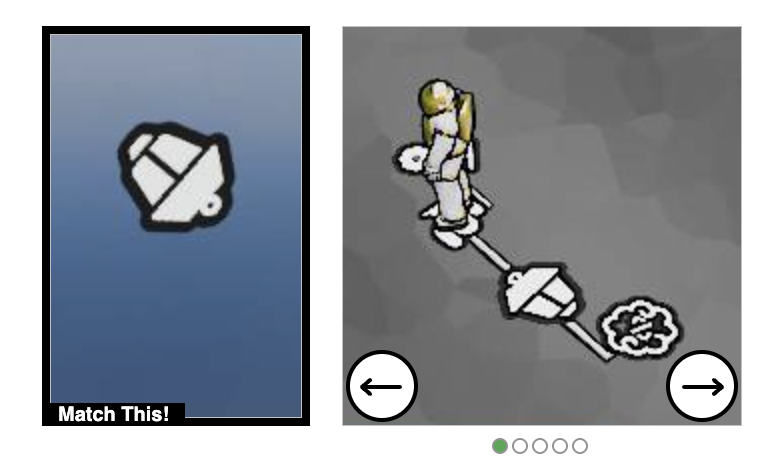
Arkose Labs does not presume that verification means legitimacy. Our challenge is not a gate, it is an intelligence sensor: a mechanism that treats every session interaction, regardless of outcome, as a source of behavioral signal that feeds directly into risk scoring, detection model tuning, and adaptive enforcement. The question we are asking at every round is not "did you solve it?" It is: "what does the full context of how you're interacting with this challenge tell us about who you are and what you're trying to do?"
The signals are specific and measurable:
- Round solve time. Bots and AI agents solve at statistically non-human speeds, or show artificially throttled timing engineered to mimic human cadence. Both patterns are detectable. Neither looks like an organic user under real cognitive load.
- Answer patterns. Whether a session navigated the image carousel before answering, or submitted an answer without visually processing the options, is a strong discriminating signal for automated solvers, including AI agents applying vision model inference to frames they never actually rendered for a human viewer.
- Failure signatures. How a session fails, how many times, and in what sequence. Structured failure patterns, consistent error types, predictable retry intervals, failure confined to specific puzzle categories, reveal machine behavior in ways that random human error does not.
- Behavioral consistency. Machine-like regularity across rounds, micro-timing distributions that no human nervous system produces, and response latency patterns that don't vary the way human attention does are all fingerprints that organic behavior cannot replicate.
This intelligence doesn't sit in a log. It flows back into the detection model in real time, adjusting pressure, informing adaptive challenge behavior, and contributing to the global picture of traffic that makes every subsequent session easier to classify accurately
The challenge gets smarter with every session. Including every session that passes.
A Product Roadmap Built on Intelligence, Not Classification
This is not a philosophical position that exists independently of the product. Every major feature currently in development is a direct expression of the intelligence-gathering model, and each one is designed with the reality of agentic AI traffic in mind.
Multi-puzzle challenge. Dynamically changes puzzle type per round based on observed session behavior, increasing the depth and variety of biometric and solving data collected per session. For a human, this is natural, each round is a slightly different cognitive task, and the transitions feel organic. For an AI agent applying a consistent solving strategy, it is a problem: no single model is expert at all puzzle types simultaneously, and the dynamic rotation prevents the agent from committing to a strategy that works across the full session.
Adaptive challenge. Changes challenge behavior dynamically per round based on in-session and cross-session signals. As anomalous patterns accumulate, whether from a human fraud operator, a scripted bot, or an autonomous AI agent, pressure escalates in real time. The challenge responds to what it is learning about the session, rather than applying a static difficulty level set before the session began.
Proof of Work with biometrics. Provides a low-friction path for lower-risk sessions, including authorized AI agents acting on behalf of legitimate users, while building a behavioral picture of traffic without exposing valuable challenge assets to fraudulent sessions. For legitimate agentic AI, it is an accessible, appropriate enforcement option. For an attacker probing at scale, it is another data point in the model.
These are not feature updates to an existing architecture. They are product expressions of a fundamentally different understanding of what a challenge is for.
Transparency as a Strategic Advantage
The intelligence Arkose Titan gathers does not stay inside Arkose Titan.
Rather than treating detection as a black box, we share what we learn with customers, giving them the context to understand not just what was blocked, but why, and what signals drove the decision. This turns Arkose into a data partner, not just a security layer. Customers can extend the intelligence downstream into their own fraud stacks, their own agentic AI governance frameworks, and their own risk models.
In a world where AI-powered attacks are adapting faster than any single team can track, shared intelligence is a structural advantage. The platform that learns from the largest, most diverse session dataset, and makes that learning available to every customer, is the platform that stays ahead of the evolution curve.
What This Means for 2026
We stopped being a CAPTCHA a long time ago, because a CAPTCHA asks the wrong question. A CAPTCHA asks "are you human?" We ask: "what are you doing, how are you doing it, and does the full context of your behavior suggest legitimate intent?" In a world of agentic AI, those are the only questions that matter. And the intelligence those questions generate is what makes the economics of deterrence work, because you cannot impose cost intelligently without signal.
The shift from binary classification to continuous, adaptive intelligence gathering is not a refinement of CAPTCHA. It is a redefinition of what a challenge is for, and what it must do to remain effective when the attacker, or the legitimate user, is an AI agent.
That philosophy shapes how our challenge mechanism, MatchKey, was designed from the ground up. In blog 3 of this series, we go into the attacker data and research behind it, including the emergence of AI-powered attack tooling and the specific threat properties of agentic AI that drove every design decision, and why a challenge built for this landscape had to start from a completely different set of questions than anything that came before it.
Continue Reading: The Disrupting Fraud Economics Series
Blog 1: The Economics of Fraud Have Changed. Here's Why.
Blog 2: We Are Not a CAPTCHA — Why the Turing test model is obsolete (this post)
Blog 3: What Attackers Taught Us — Proprietary attacker data that shaped MatchKey
Blog 4: Inside MatchKey — Architecture designed to make attacks economically irrational
Blog 5: The Audio Challenge — The only audio challenge that is both accessible and secure
Blog 6: Challenge Engineering Built to Withstand AI-Powered Attacks — The engineering beneath the challenge
Blog 7: Intent, Not Identity — Introducing Arkose Agent Trust Manager